Secure Homeowners Plans Wichita
Your Wichita home insurance needs stays current with increasing rebuild costs and severe wind-hail damage. Opt for comprehensive replacement protection for your property and personal items, incorporate building code protection, and schedule valuable items. Right-size deductibles, confirm wind-hail percentage triggers, and maintain records website of roof condition; impact-resistant or metal roofs can earn significant discounts. Align Coverage A/B/C with local rebuilding costs, maintain detailed records, and combine coverage for savings. Research A-rated carriers and independent agents based on storm claim management and reputation. Read on to see how to finalize this coverage.
Main Highlights
- Select insurers known for a reliable reputation for handling claims, quick catastrophe response, and trusted local contractors for managing the area's severe weather events.
- Review home coverage limits each year; use regional rebuilding costs to keep pace with increasing labor and material costs.
- Opt for full replacement coverage on your house and belongings; remember to add ordinance and law coverage and list valuable items.
- Control wind and hail risks with Class 4 shingles, fortified garage doors, and documented roof maintenance to obtain premium discounts.
- Set liability coverage at $300k-$500k (consider adding an umbrella policy); bundle home and auto insurance and add monitored security systems for dependable cost reduction.
Why Wichita's Housing Market Changes Impact Your Policy
As Wichita's real estate market fluctuates, your home insurance coverage should change with home values, materials costs, and neighborhood conditions. You need to watch market dynamics because fluctuating sale prices, resource limitations, and construction expenses immediately impact your home's replacement value. As replacement costs go up, your underinsurance risk expands; conversely, if they decline, you can reduce premiums without compromising coverage.
Assess property limits, replacement value factors, and inflation safeguards each year. Compare insurance providers' assessment methods and request updated reconstruction estimates tied to area-specific labor and materials pricing. Reassess deductibles to optimize policy affordability with cash-on-hand. Monitor neighborhood trends-home improvements, safety concerns, and weather-related risks-to adjust policy add-ons and claim conditions. Schedule semiannual check-ins so your coverage continues to be appropriate, streamlined, and sound.
Fundamental Insurance Coverage for Wichita Property Owners
The key elements of protection include these core protections: home coverage for rebuilding costs, protection for other buildings including fences and detached garages, protection for your personal possessions, temporary housing coverage when your home is uninhabitable, personal liability for third-party injuries or damage, and guest medical coverage regardless of fault. Always configure dwelling coverage limits according to rebuilding expenses, instead of sales price, and extend protection with code upgrade coverage for compliance requirements. Remember to separately cover high-value possessions beyond standard coverage limits.
Opt for replacement cost coverage, rather than actual cash value, for your building and belongings. Match liability limits with your net worth and think about an umbrella plan. Improve your protection plan with home disaster preparedness: catalog your possessions, refresh your documentation, and follow a regular maintenance schedule to reduce claims and get better rates.
Severe Weather Exposure in Kansas's South-Central Region
Year after year, South-Central Kansas exposes your home and wallet to intense challenges with destructive hail, powerful gusts, and tornadoes. You encounter persistent spring supercells, gusts exceeding 60 mph, and hailstones that shred shingles, damage gutters, and crack windows. Prioritize hail preparedness: hail-resistant roofing, reinforced garage doors, secured outdoor equipment, and detailed pictures of exterior surfaces. Prune trees, fasten trampolines, and check sump pump function to combat wind-driven rain.
Upon hearing sirens, implement these tested tornado safety measures: lowest-floor interior space, protective headgear and robust footwear, and an air horn or whistle for rescue signaling. Have ready a preparedness pack with insurance information, important images, power adapters, and prescribed medicines. Check your insurer's claim hotline, recommended repair specialists, temporary living arrangements, and debris-removal guidance ahead of storm season.
Comparing Replacement Cost and Actual Cash Value: Which Option Is Best
When it comes to your Wichita home policy, few decisions impact your claim check more than choosing Replacement Cost (RC) or Actual Cash Value (ACV). Replacement Cost coverage allows to restore or replace with new materials of like kind and quality, without considering depreciation. Alternatively, ACV accounts for depreciation, requiring you to cover the difference. Looking at different coverage options, RC generally comes at a higher price but helps safeguard your budget when damage occurs.
Consider some insurance claim examples: a 15-year-old roof worth $18,000. RC coverage handles the entire replacement cost once you pay your deductible, whereas ACV could only pay $9,000 assuming 50% depreciation. In cases of internal water damage, RC pays for brand new cabinets and flooring at present-day rates; ACV pays their current used value. Choose RC if you prefer predictable recovery costs; choose ACV when the premium savings justify the coverage gaps.
Insurance Deductibles: Wind-Hail Endorsements and Storm Coverage Explained
Given that Wichita weather can change rapidly, your deductible setup is as crucial as your coverage limit. You'll usually choose a flat-dollar deductible for most claims, but wind-hail endorsements commonly carry separate, percentage-based deductibles connected to your dwelling value. Know your policy triggers: some companies implement the wind-hail deductible only when a named peril or specific meteorological threshold is met; others apply it to any wind-driven loss. Review storm exclusions thoroughly-cosmetic roof damage, matching issues, or wear-and-tear may be excluded, transferring more cost to you. Verify whether the separate storm deductible is calculated per event or per occurrence year, and how it affects claim frequency surcharges. Aim for a deductible you can fund today without compromising future repairs.
Coverage Limits for Dwelling, Other Structures, and Personal Property
Before looking at different insurance costs, you need to set appropriate limits for every insurance category: dwelling (Coverage A), other structures (Coverage B), and personal property (Coverage C). Begin by determining an accurate reconstruction value for your Wichita home, not the market value. Use a rebuild cost calculator and revise it after renovations. For Coverage B, measure the overall size and building components of detached garages, fences, and sheds; raise coverage levels if premium materials raise rebuilding expenses.
When managing Coverage C, choose contents replacement cost coverage and keep detailed documentation of valuable items. Utilize comprehensive inventory methods like systematic room photography, recording of serial numbers, and receipt records backed up to the cloud. Specifically document high-value possessions that exceed standard sublimits. Evaluate insurance limits yearly to adjust for inflation, construction costs and new acquisitions. Align policy endorsements from the start to make certain policy provisions align properly.
Kansas Home Insurance: Liability and Medical Payment Guidelines
It's important to maintain personal liability limits high enough to protect your assets from legal claims resulting from injuries or property damage you're accountable for. Add medical payments coverage that covers small, no-fault medical bills for people who suffer injuries on your property, enabling quick resolution of claims. We'll identify Kansas-appropriate limits and alignment with umbrella policies so you're covered with precision, not guesswork.
Personal Liability Limits
While structural coverage rebuilds your home, personal liability insurance protects your wealth when injuries or property damage occur at your residence. Select coverage limits that match your financial situation and exposures: home equity, savings, future income, and daily hazards. Dog ownership, backyard pools, vacation rentals, or regular parties raise the risk of personal injuries or legal disputes. Start with a minimum of $300,000, but $500,000 offers more security in Wichita's legal environment. If your wealth is more than your policy limits, enhance your coverage with excess liability coverage of $1-5 million or more; this protection is cost-effective for the protection and covers legal expenses, compensation, and judicial awards. Review deeds, account information, and liability waivers annually. Update protection after property updates, acquisitions, or lifestyle shifts to ensure full coverage.
Medical Expense Coverage
Protect yourself for pennies with Medical Payments to Others ("Med Pay") on a Wichita homeowners insurance plan. The policy pays for reasonable medical expenses if a guest has an accident at your home-regardless of fault. Quick resolution of minor injuries is possible, ease concerns, and frequently avoid legal action. Choose limits carefully; $1,000 is common, but $5,000-$10,000 provides better protection when healthcare costs add up.
Consider when to file claims. Report incidents right away, keep detailed notes, gather statements from witnesses, and keep all itemized bills. Your insurer pays for eligible expenses such as ambulance transportation, sutures, and medical assessments, but excludes household members or routine medical care. Coordinate Med Pay with your personal liability coverage to shield yourself from bigger expenses, and adjust limits after renovations, bringing in animals, or increasing guest frequency.
Money-Saving Strategies Without Compromising Security
Maximize your insurance costs more effectively by implementing intelligent savings and packaging without compromising key insurance benefits. Initiate with a combined home-auto policy to access multiline credits. Include smart device benefits: surveillance equipment, leak sensors, and automated climate systems that reduce risk and show preventive care. Ask about no-claims and eco-friendly billing savings, full payment incentives, and long-term customer perks for dedicated clients.
Increase your deductible thoughtfully to lower premiums, but keep an emergency fund that matches the new deductible. Boost protection for essential coverage - full replacement value for dwelling and personal property - then eliminate additional features you don't require. Confirm each discount shows up on your declarations page and check yearly for additional discounts. Shop around for better rates, but ensure you're comparing equivalent coverage: the same protection levels, endorsements, and loss-settlement terms. You'll reduce costs without compromising protection.
How Roof Age, Materials, and Upgrades Impact Insurance Premiums
Insurance costs tend to increase with aging roofs, because insurers consider the risks of leaks, compromised wind resistance, and shorter remaining life. You can reduce your insurance costs by choosing durable materials like metal, tile, or impact-resistant shingles rated for Wichita's common hail and high winds. When upgrading your roof, be sure to document installation dates, permits, and manufacturer ratings to qualify for discounts and optimize your savings.
Older Roofs Lead to Higher Rates
Even if your home's structure is sound, a deteriorating roof can gradually raise your Wichita homeowners insurance premium up. Insurers scrutinize roof age because older shingles deteriorate, warp, and lose material, leaving the underlying materials vulnerable to water. Such damage leads to more frequent claims from leaks, interior damage, and mold. Insurance companies factor this into rates, so you face higher costs as your roof gets closer to replacement age.
Insurance underwriters also flag ventilation issues. Poor attic airflow contributes to excessive heat buildup and ice dam formation, which shortens shingle longevity and escalates damage potential. You can counter these concerns with proper upkeep records: update compromised flashing, repair penetration points, maintain clean gutters, and certify roof condition after storms. Provide verification including billing records, documentation, and expert evaluations. This maintenance strategy indicates decreased exposure and supports negotiating better insurance rates.
Impact on Material Durability
These maintenance practices matter more when combined with long-lasting materials. Insurance companies determine your coverage by evaluating roof durability over time, so they assess material longevity, water resistance, and system integration. When your roofing materials work as a unified system, you reduce weak spots and claims risk, which can result in lower premiums.
Make sure to maintain detailed records of service history and keep proof for system checks, sealant updates, and flashing work. Insurance companies view such records as verification that you properly maintain wear, rather than simply reacting to it. Furthermore, they examine the way your roof manages Wichita's extreme weather patterns; high-quality moisture protection and strength ratings signal fewer moisture and mold concerns. Finally, compatibility is crucial: mixing metals with mismatched substrates can accelerate corrosion, while properly matched components preserve integrity and regulate your insurance premiums.
Financial Benefits of Roof Improvements
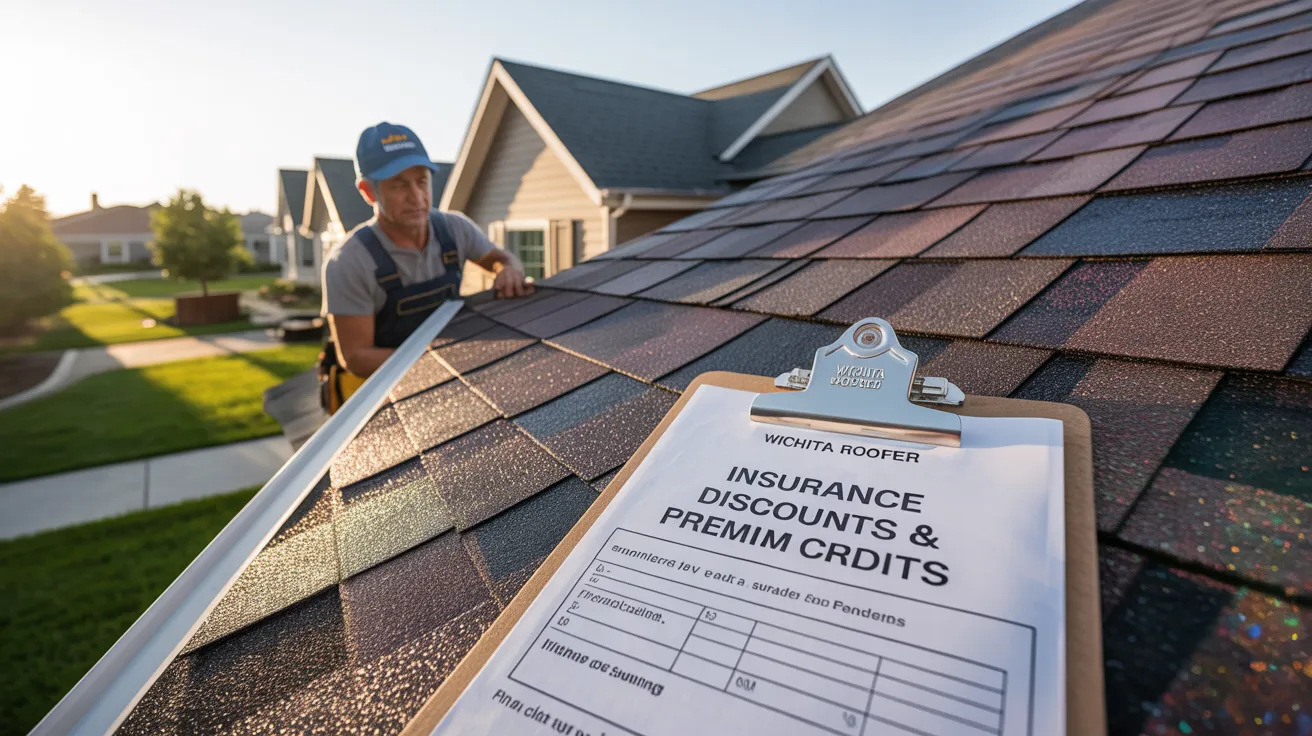
Upgrading your roof is one of the quickest ways to decrease Wichita insurance premiums because insurance companies assess risk based on material type, age, and impact performance. Updated roofs lower loss frequency, so carriers reward homeowners with better base rates and budget-friendly wind/hail deductibles. Opt for Class 4 impact-resistant shingles to prevent hail damage; many insurance companies provide 10-30% savings. Metal roofing and concrete tiles typically receive higher reductions than standard 3-tab asphalt shingles.
Consult with your contractor concerning energy-smart shingles that lower attic temps and may qualify for tax credit benefits, combining utility discounts with insurance savings. Keep records of permits, manufacturer certifications, and installation dates, then forward them to your insurance provider. Install secondary water protection, drip edge, and ice and hurricane shingle starters to additionally lower risk and improve your renewal rates.
Analyzing Insurance Providers and Independent Brokers throughout Wichita
Sort through the choices by weighing Wichita's home insurance offerings between local providers and independent brokers. Local carriers often feature rapid claims settlement, internal adjusters, and comprehensive community insight. You'll get responsive service after severe weather and customized endorsements for established properties near storm-prone regions. Their local presence fosters trust, but policy selections can be narrow and pricing less flexible.
Independent agents work with several highly-rated insurers for your benefit. Their professional connections let you assess crucial aspects such as weather-related protection, roof surfacing credits, rebuilding cost coverage, and building code protection in a single discussion. You'll secure benefits with rates and protection choices, though service quality varies by agency. Remember to discuss disaster handling procedures, roof coverage specifications, and claims handling support. Afterward review complete coverage pricing, claims service history, and upgrade benefits—pick the agency that proves both competence and dependability.
Popular Questions
Does Wichita Insurance Cover Short-Term Rentals Like Airbnb or VRBO?
Yes, but regular homeowners policies generally don't cover business activity, so you'll need additional coverage specifically for short-term rentals. Ask for coverage that includes liability for short-term rentals, liquor liability coverage, income loss protection, and property coverage. Check requirements for guest verification, local laws, and property management standards. Record all security measures, set up electronic access controls, and keep a maintenance log. Review insurance limitations for party events and pets. Secure written confirmation before listing.
Is Sump Pump or Sewer Backup Coverage Included Automatically?
No, these are typically not included in standard coverage. You'll need to specifically request additional coverage for sump pump and backup issues. Most basic policies don't cover damage from sewer backups and sump pump failures. Remember to obtain a water backup rider, pick suitable coverage limits, and check all coverage parameters, covering activation requirements, waiting periods, and restrictions. Don't delay, because companies often restrict these endorsements when there's a history of claims or severe weather anticipated.
Can I Get Insurance for Detached Home Offices and Studios with Business Equipment?
Insurance coverage is available for detached home offices or studios with business equipment. Business property has restrictions under standard homeowners policies, requiring additional endorsements. Schedule high-value tools with an equipment floater and raise business property limits for items both on and off the premises. When clients come to your remote workspace, you should look into liability coverage or a home-based business policy. Ensure you're covered for accidental damage, theft, and business interruption, and document serial numbers, receipts, and photos for smooth claims.
What Happens When Processing Claims for Combined Hail and Flood Damage?
It's important to process individual claims for flood and hail incidents, since typical policies don't include flood. Begin the claims process right away, catalog damage according to cause, and take steps to prevent additional damage. The insurance professionals examine claims concurrently, assign repair responsibilities, and process individual deductibles for every claim. If you have flood coverage through NFIP or private carriers, that insurer processes flood loss claims. Expect varying payout schedules: hail damage usually settles within weeks; flood claims may take longer, depending on site inspections, loss documentation and construction estimates.
Are Code Upgrades Required by Wichita Building Ordinances Covered by Insurance?
Coverage applies when you maintain Ordinance or Law coverage. Traditional homeowners insurance excludes building code upgrades. Include this coverage to safeguard against demolition, increased construction costs, and loss of undamaged parts required by Wichita's building code. Verify sublimits and overall policy limits, as code compliance expenses may rapidly surpass basic coverage. Work with your agent to coordinate limits with your home's age, materials, and risk profile, and verify what's not covered prior to filing.
Final Thoughts
You have options when it comes to Wichita insurance coverage, but random decisions won't cut it. Make sure to secure essential coverages, opt for replacement cost over ACV, and set reasonable deductibles-especially for wind and hail damage. Carefully evaluate roof integrity and materials like a professional inspection, because storms are unforgiving. Consider bundling for discounts, but verify protection limits keep up with today's lawsuit environment. Evaluate local companies and independent agents, then take action. The best time to optimize your policy was yesterday, but now is your next best opportunity.